Application
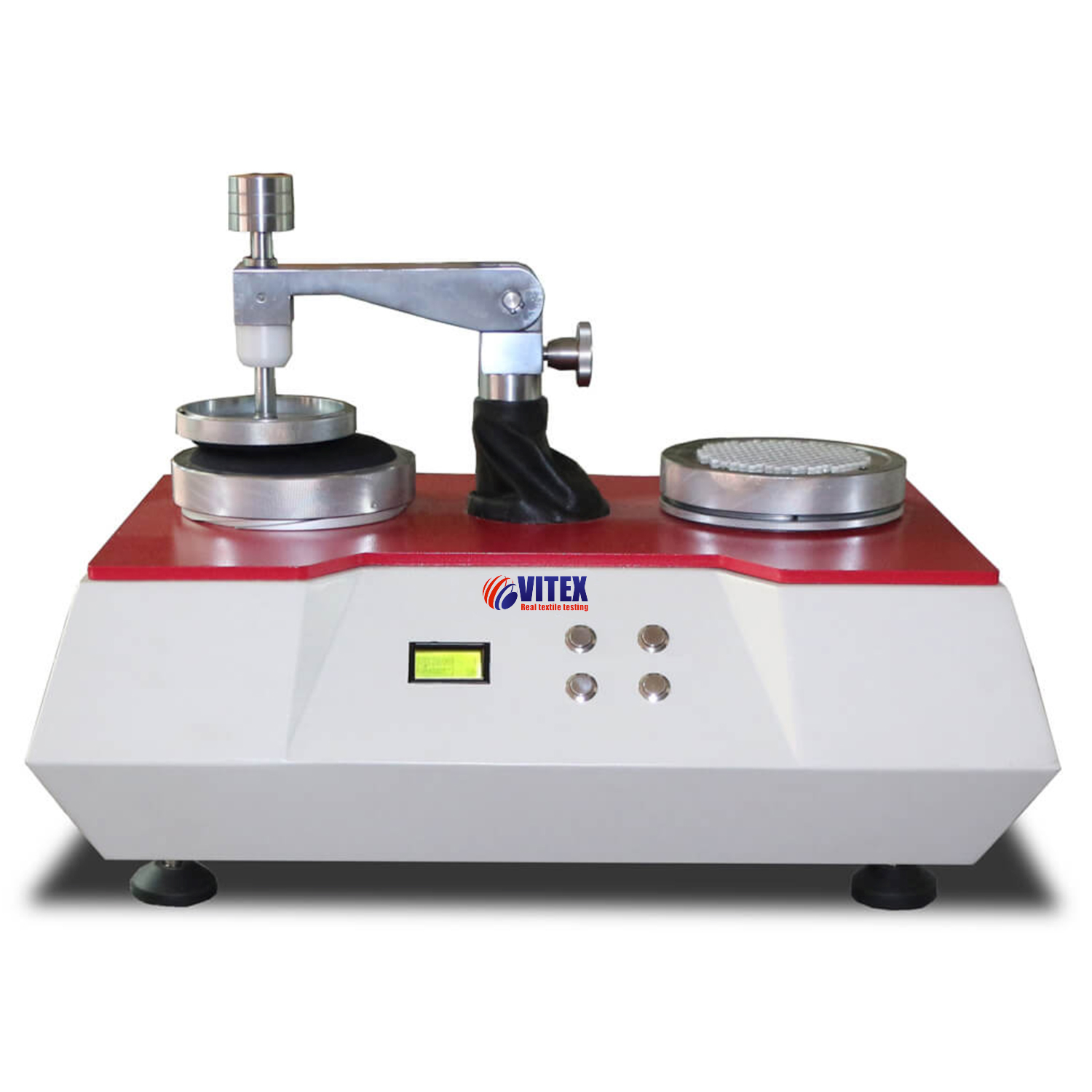
The VIT-225 Advanced Circular Motion Pilling Tester is designed to evaluate surface deterioration and fabric quality for a variety of materials, including wool, synthetic fibers, blends, knitted, and woven fabrics. This device uses an active friction system where the fabric sample is rubbed against a nylon brush and/or abrasive cloth under controlled conditions. The test delivers results in minutes, with the sample grip and abrasive platform moving in a circular motion at a consistent speed of 60 ± 1 r/min. The grip applies adjustable pressure to the sample with a precision tolerance of ±1%. For added safety and convenience, the machine is equipped with an automatic stop function.
Testing Method
Different materials and fabric types require specific pilling test methods. The circular motion method is widely used in the Chinese market and is especially suitable for woven fabrics and some knitted materials like sportswear, T-shirts, and underwear. For filament fabrics and short fibers, the sample is first abraded with a nylon brush, followed by an abrasive cloth. Wool fabrics and materials prone to pilling can be tested directly with an abrasive cloth. After testing, the sample is compared against a standard reference in a pilling assessment viewer to determine the pilling grade.
Test Procedure
- Power on the device and position the holder support so the bottom of the holder faces upward.
- Place a backing foam on the bottom surface of the specimen holder, then position the conditioned sample on top with the fabric’s outer surface facing outward. Secure tightly using the holder nut.
- If needed, place a wool felt on the pilling table, followed by an appropriate abrasive gabardine cloth, and tighten securely.
- Lower the sample holder so the sample makes proper contact with the fuzzing brush or abrasive surface.
- Set the desired number of test cycles.
- Start the test by pressing the START/STOP button; the machine will automatically stop when the set number of cycles is completed.
- To interrupt the test, press the START/STOP button again. You can reset the counter to zero or continue from the current cycle count.
- Once testing is complete, remove the sample and clean the machine with a soft cloth. Cover the device to protect it from dust and moisture.