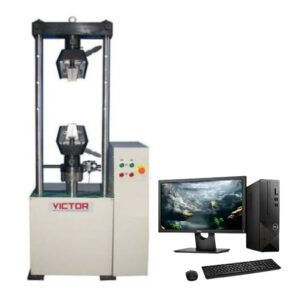
Application
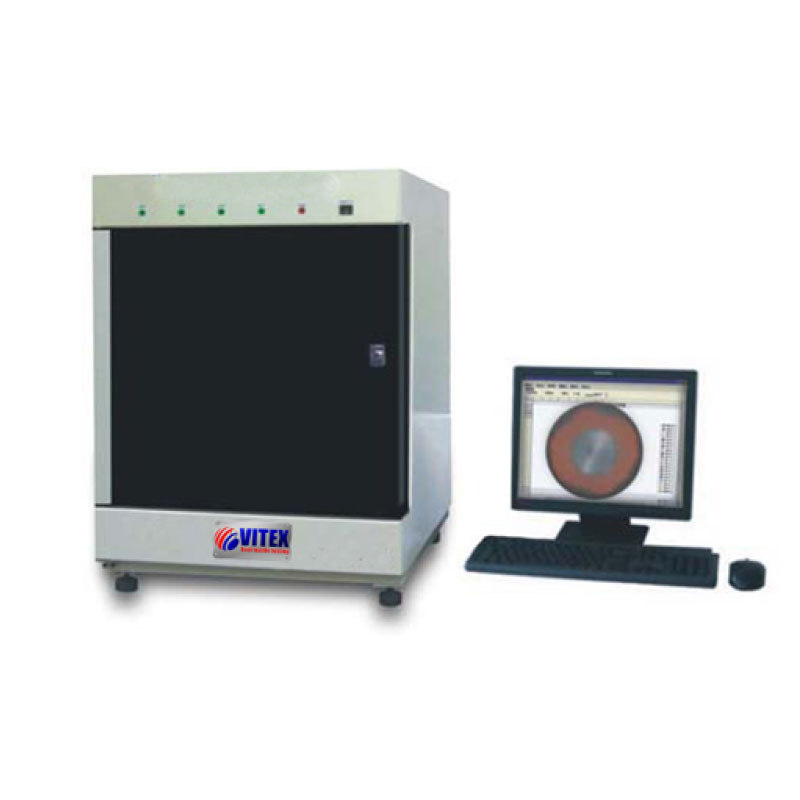
The Fabric Drape Tester is designed to measure and calculate the drape coefficient of fabrics using advanced image processing technology. It is suitable for testing the drape properties of all types of fabrics. The tester is equipped with a CCD imaging system for dynamic and static image processing, providing a variety of charts, data statistics, analysis, storage, and output. The system allows testing of specimens in any color without the need to change the background color.
Specification
Standards
BS EN 9073, BS 5058, ERT 90-1, AFNOR G07-109, UNI 8279, FZ/T01045
Power
220 V 50 Hz, 120 W
Weight
160 kg
Dimensions
480 x 540 x 870 mm (L x W x H)
Technical Specifications
- Imaging System: CCD controlled, full-automatic image processing and data analysis
- Drape Coefficient Range: 0 ~ 100%
- Accuracy: ±1.5%
- Specimen Disc Diameter: 120 mm (optional 180 mm)
- Specimen Diameter: 240 mm (optional 300 mm, 360 mm)
- Light Source: Controlled lighting system
- Rotation Speed: 10 ~ 120 rpm
Testing Method
Fabric Drape Definition
Fabric drape refers to how a fabric forms and hangs under its own gravity. It plays an important role in the fabric’s visual appearance and aesthetic comfort. Draping represents the degree of droop and the shape of the fabric, which are key factors in determining the fabric’s visual appeal. Fabrics like Poe knit fabrics tend to have poor drape, while materials such as curtains have excellent drape properties. The fabric drape tester helps in selecting the appropriate fabrics with suitable drape characteristics.
Drape Test Principle
To test drape, a circular fabric specimen is placed on a supporting disk. A perpendicular light source is directed at the fabric, and the projection of the sample is captured. The percentage of the projected area relative to the original area is calculated using image processing methods.
Drape Index
There are three common parameters for evaluating fabric drape:
- Drape Shape: Refers to the number and size of twists in the fabric.
- Drape Degree: Describes the drooping extent of the fabric’s free edges.
- Drape Coefficient (F): Refers to the ratio of the projected area to the original area of the fabric. A lower drape coefficient indicates better drape.
Sample Preparation
- Ensure the sample is conditioned in standard atmospheric humidity.
- Sample Diameter Selection:
- For a clamping disc diameter of 12 cm, use samples with a 24 cm diameter.
- For a clamping disc diameter of 18 cm, start with a 30 cm diameter sample and calculate the drape coefficient.
- If the drape coefficient is less than 30%, use a 24 cm diameter sample.
- If the drape coefficient is between 30% and 85%, use a 30 cm diameter sample.
- If the drape coefficient is greater than 85%, use a 36 cm diameter sample.
- Take at least three samples for each fabric, testing both the front and back sides.
What is Drape Testing?
The Fabric Drape Tester measures the drape coefficient of fabric, which is influenced by factors such as weight, stiffness, thickness, and rigidity. Different fabrics exhibit varying drape characteristics. The tester provides precise calculations for the drape properties, offering a consistent, reproducible way to assess fabric drape.