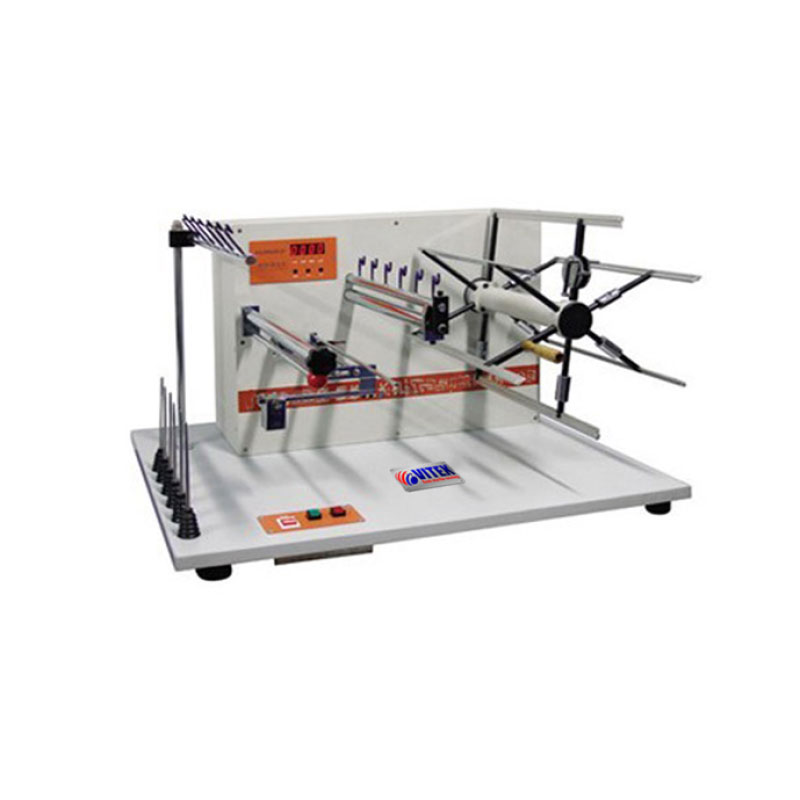
VIT 360A/B – Yarn Wrap Reel for Count and Strength Testing

[product_tags_no_comma_alt]

Application

The Yarn Wrap Reel is used to create skeins of yarn with a predetermined length and number of turns, ideal for yarn count and strength testing. Available with a 1-meter, 36-inch, or 54-inch circumference collapsible swift (please specify). The wrap reel comes complete with a yarn package stand and a pre-tension device, and is equipped with a pre-determined counter for accurate measurements.

Specification

Standards
Complies with:

  • ISO 2060, ASTM D1907/2260, BS 2010, DIN 53830, GB/T4743, GB/T14343, GB/T6838

Specifications

  • Power: 220 / 110 V, 50/60 Hz
  • Weight: 75 kg
  • Dimensions: 960 x 760 x 650 mm (L x W x H)
  • Circumference of Winch:
    • TY360A: 1000 ±1 mm
    • TY360B: 54 ± 1/16 inch
  • Number of Wraps: 1 ~ 9,999 adjustable
  • Pre-tension: 2 ~ 100 cN
  • Traveling Reciprocating Distance: 35 mm
  • Spacing of Spindles: 60 mm
  • Reel Speed: 20 ~ 280 rpm (variable)

Testing Method

Determination of the Yarn Count Using the Wrap Reel

Objectives
To determine the yarn count using the wrap reel.

Equipment

  • Yarn Wrap Reel Machine (VIT 360)
  • Yarn Count Tester (VIT 361)

Procedure

  1. Place the given yarn sample on the wrap reel.
  2. Start the wrap reel yarn testing process.
  3. Weigh the yarn using the yarn count tester.
  4. Convert the weight unit (from grams to pounds if necessary).
  5. Record the data and calculate the yarn count using the following equation:
    Yarn Count=Length in yards×Weight unit840×Weight in poundstext{Yarn Count} = frac{text{Length in yards} times text{Weight unit}}{840 times text{Weight in pounds}}Yarn Count=840×Weight in poundsLength in yards×Weight unit​
  6. Calculate the average yarn count for the sample.

Conclusion
The procedure for determining yarn count using the wrap reel is straightforward. Attention must be given to the units used, particularly when converting from grams to pounds.

Coming Soon

Application

The Yarn Wrap Reel is used to create skeins of yarn with a predetermined length and number of turns, ideal for yarn count and strength testing. Available with a 1-meter, 36-inch, or 54-inch circumference collapsible swift (please specify). The wrap reel comes complete with a yarn package stand and a pre-tension device, and is equipped with a pre-determined counter for accurate measurements.

Specification

Standards
Complies with:

  • ISO 2060, ASTM D1907/2260, BS 2010, DIN 53830, GB/T4743, GB/T14343, GB/T6838

Specifications

  • Power: 220 / 110 V, 50/60 Hz
  • Weight: 75 kg
  • Dimensions: 960 x 760 x 650 mm (L x W x H)
  • Circumference of Winch:
    • TY360A: 1000 ±1 mm
    • TY360B: 54 ± 1/16 inch
  • Number of Wraps: 1 ~ 9,999 adjustable
  • Pre-tension: 2 ~ 100 cN
  • Traveling Reciprocating Distance: 35 mm
  • Spacing of Spindles: 60 mm
  • Reel Speed: 20 ~ 280 rpm (variable)

Testing Method

Determination of the Yarn Count Using the Wrap Reel

Objectives
To determine the yarn count using the wrap reel.

Equipment

  • Yarn Wrap Reel Machine (VIT 360)
  • Yarn Count Tester (VIT 361)

Procedure

  1. Place the given yarn sample on the wrap reel.
  2. Start the wrap reel yarn testing process.
  3. Weigh the yarn using the yarn count tester.
  4. Convert the weight unit (from grams to pounds if necessary).
  5. Record the data and calculate the yarn count using the following equation:
    Yarn Count=Length in yards×Weight unit840×Weight in poundstext{Yarn Count} = frac{text{Length in yards} times text{Weight unit}}{840 times text{Weight in pounds}}Yarn Count=840×Weight in poundsLength in yards×Weight unit​
  6. Calculate the average yarn count for the sample.

Conclusion
The procedure for determining yarn count using the wrap reel is straightforward. Attention must be given to the units used, particularly when converting from grams to pounds.

Coming Soon

Save Big on High-Precision Tools!
Get up to 30% off on selected testing machines. Hurry, offer ends soon!
Need Expert Advice?
Speak with our specialists to find the perfect engineering equipment for your needs.

Request a Quote or Further Information

Please fill in the request form below and one of our engineers will contact you to discuss your system requirements and if we can help, our typical response time is within 1 – 3 working day.

What you should know

Well, there's a few conditions that apply:

  • You agree NOT to pay us for this service.
  • You're comfortable with supplying us with relevant information in this form as well as other relevant information surrounding the request, for example; what you want, how many, delivery deadlines, restrictions on the location of the supplier, price targets etc.
  • We may only process requests where the email address submitted matches the company name. We may not respond to free email accounts such as Hotmail.
  • You agree that all information provided in this inquiry form represents yourself or an entity that you can speak for, that the information is accurate to the best of your knowledge and that if we determine that you have given false information we may choose not to proceed with this request.
  • You accept that, the operators of this site, cannot guarantee the suitability of any materials, equipment or services you may purchase from a supplier we've contacted on your behalf. You must check that out with the supplier.
  • We respect your privacy and only pass on the details contained in your request to appropriate suppliers in accordance to your inquiry. As we will share your information with related suppliers, we need your permission to do this by you clicking the submit button. We respect your privacy and promise you will only receive related information in accordance with testing and measuring instruments or equipment news and updates. You can unsubscribe from any of these services at any time by simply forwarding an email to [email protected].
  • We can't guarantee that the supplier will respond and if they don't, you agree you won't get angry with us. However, if you don't receive a response within 10 working days, please send us a follow-up message and we'll try and help further.