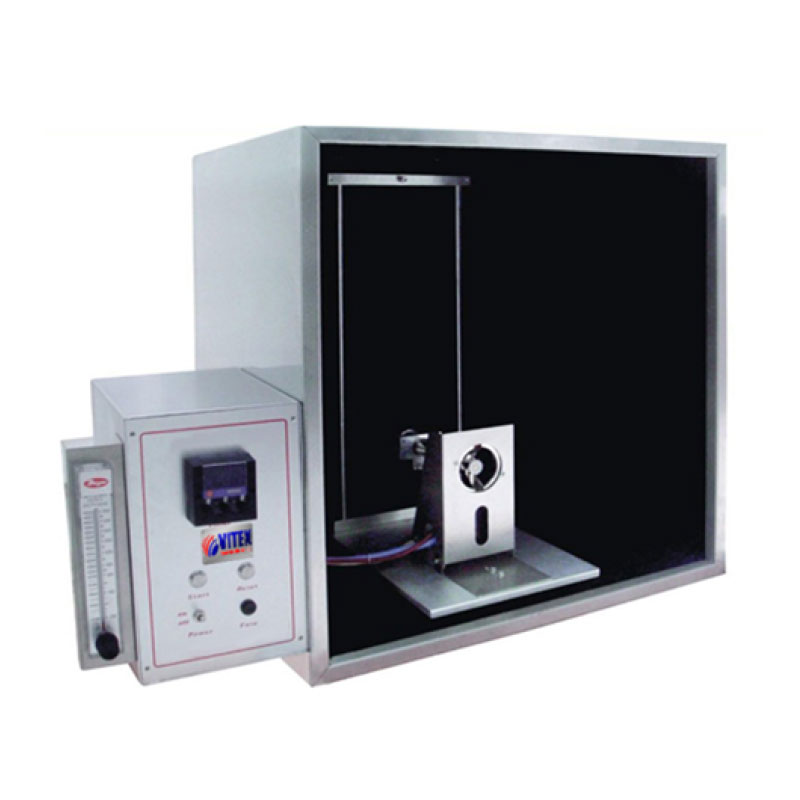
VIT 320 – NFPA 701-1 Flammability Tester

[product_tags_no_comma_alt]

Application

The NFPA 701-1 Flammability Tester is designed to determine the ignition resistance properties of draperies and other hanging fabrics. It is suitable for testing single-layer and multi-layer fabrics in accordance with NFPA 701-2004 Test Method 1. However, it is not suitable for fabrics with a density greater than 700g/m² (21oz/yd²), such as ethylene-coated fabrics, which should be tested using Test Method 2.

Testing Method

Test Range

  • Test Method 1: Suitable for materials like table skirts, curtains, tablecloths, decorative curtains, and other hanging fabrics. It is ideal for single-layer and multi-layer fabrics with a density less than 700g/m².
  • Test Method 2: Suitable for fabrics with a density greater than 700g/m², including multi-layer fabrics, films, plastic curtains, shade cloths, tents, and similar building materials.

Test Requirements

  • Test Method 1:
    1. After removing the ignition source, the combustion time should not exceed 2 seconds.
    2. The average mass loss of the sample during combustion should not exceed 40%.
  • Test Method 2:
    1. The combustion time of any single sample after removing the ignition source should not exceed 2 seconds.
    2. If the sample drops to the bottom of the test box during the burn test, its burning time should also not exceed 2 seconds.
    3. The standard for the scorching length of a folded specimen depends on the type of material being tested.

General Requirements for Testing

  1. The test sample, consisting of one or more layers of fabric, is suspended vertically from the bar near the rear of the open test cabinet.
  2. A specific flame is applied to the center of the bottom edge of the sample for 45 seconds, then removed.
  3. The sample should burn until the flame extinguishes on its own, ensuring no further damage occurs.
  4. After testing, remove the sample from the bar, adjust the room environment, and weigh it again.

Test Step

  1. Instrument Adjustment and Sample Preparation: Adjust the air ventilation of the burner and set air velocity and methane velocity according to test specifications. Cut 10 samples to the standard size, and if testing multi-layer fabric, stitch them together.
  2. Sample Fixing: Attach the short edge of the sample to the rod, ensuring the fabric hangs naturally perpendicular to the rod. The fabric surface should face the rear of the test box, as it would in normal use.
  3. Burner Placement and Preparation: The burner should be positioned so that the distance between the flame and the sample surface is 25 ± 2 mm. Ensure the burner’s central axis is horizontally perpendicular to the bottom center of the sample. Open the exhaust fan.
  4. Testing: Test within 2 minutes after the sample is removed from the forced ventilation box. Expose the sample to the combustion flame for 45 ± 1 seconds, then cut off the airflow using the burner control valve. Keep the exhaust fan running during the test.
  5. Record Test Results: Note the combustion time after airflow is stopped, the burning time if the material falls to the bottom of the test box, and any observations such as burning intensity or odor. Brush off ash and charred parts using a wire brush, then weigh the sample again and calculate the result based on the standard formula.

Specification

  • Power: 220/110 V, 50/60 Hz
  • Weight: 100 kg
  • Dimensions: 900 x 510 x 720 mm (L x W x H)

Features

  • Open-type burning chamber structure.
  • Chamber body made of calcium silicate board, wrapped in stainless steel.
  • Equipped with a standard laboratory burner.
  • Automatic recording of burning time.
  • Auto-ignition mode to reduce operator error.
  • Timer accuracy up to 0.1 second.
  • Includes a standard specimen holder.

Coming Soon

Application

The NFPA 701-1 Flammability Tester is designed to determine the ignition resistance properties of draperies and other hanging fabrics. It is suitable for testing single-layer and multi-layer fabrics in accordance with NFPA 701-2004 Test Method 1. However, it is not suitable for fabrics with a density greater than 700g/m² (21oz/yd²), such as ethylene-coated fabrics, which should be tested using Test Method 2.

Testing Method

Test Range

  • Test Method 1: Suitable for materials like table skirts, curtains, tablecloths, decorative curtains, and other hanging fabrics. It is ideal for single-layer and multi-layer fabrics with a density less than 700g/m².
  • Test Method 2: Suitable for fabrics with a density greater than 700g/m², including multi-layer fabrics, films, plastic curtains, shade cloths, tents, and similar building materials.

Test Requirements

  • Test Method 1:
    1. After removing the ignition source, the combustion time should not exceed 2 seconds.
    2. The average mass loss of the sample during combustion should not exceed 40%.
  • Test Method 2:
    1. The combustion time of any single sample after removing the ignition source should not exceed 2 seconds.
    2. If the sample drops to the bottom of the test box during the burn test, its burning time should also not exceed 2 seconds.
    3. The standard for the scorching length of a folded specimen depends on the type of material being tested.

General Requirements for Testing

  1. The test sample, consisting of one or more layers of fabric, is suspended vertically from the bar near the rear of the open test cabinet.
  2. A specific flame is applied to the center of the bottom edge of the sample for 45 seconds, then removed.
  3. The sample should burn until the flame extinguishes on its own, ensuring no further damage occurs.
  4. After testing, remove the sample from the bar, adjust the room environment, and weigh it again.

Test Step

  1. Instrument Adjustment and Sample Preparation: Adjust the air ventilation of the burner and set air velocity and methane velocity according to test specifications. Cut 10 samples to the standard size, and if testing multi-layer fabric, stitch them together.
  2. Sample Fixing: Attach the short edge of the sample to the rod, ensuring the fabric hangs naturally perpendicular to the rod. The fabric surface should face the rear of the test box, as it would in normal use.
  3. Burner Placement and Preparation: The burner should be positioned so that the distance between the flame and the sample surface is 25 ± 2 mm. Ensure the burner’s central axis is horizontally perpendicular to the bottom center of the sample. Open the exhaust fan.
  4. Testing: Test within 2 minutes after the sample is removed from the forced ventilation box. Expose the sample to the combustion flame for 45 ± 1 seconds, then cut off the airflow using the burner control valve. Keep the exhaust fan running during the test.
  5. Record Test Results: Note the combustion time after airflow is stopped, the burning time if the material falls to the bottom of the test box, and any observations such as burning intensity or odor. Brush off ash and charred parts using a wire brush, then weigh the sample again and calculate the result based on the standard formula.

Specification

  • Power: 220/110 V, 50/60 Hz
  • Weight: 100 kg
  • Dimensions: 900 x 510 x 720 mm (L x W x H)

Features

  • Open-type burning chamber structure.
  • Chamber body made of calcium silicate board, wrapped in stainless steel.
  • Equipped with a standard laboratory burner.
  • Automatic recording of burning time.
  • Auto-ignition mode to reduce operator error.
  • Timer accuracy up to 0.1 second.
  • Includes a standard specimen holder.

Coming Soon

Save Big on High-Precision Tools!
Get up to 30% off on selected testing machines. Hurry, offer ends soon!
Need Expert Advice?
Speak with our specialists to find the perfect engineering equipment for your needs.

Request a Quote or Further Information

Please fill in the request form below and one of our engineers will contact you to discuss your system requirements and if we can help, our typical response time is within 1 – 3 working day.

What you should know

Well, there's a few conditions that apply:

  • You agree NOT to pay us for this service.
  • You're comfortable with supplying us with relevant information in this form as well as other relevant information surrounding the request, for example; what you want, how many, delivery deadlines, restrictions on the location of the supplier, price targets etc.
  • We may only process requests where the email address submitted matches the company name. We may not respond to free email accounts such as Hotmail.
  • You agree that all information provided in this inquiry form represents yourself or an entity that you can speak for, that the information is accurate to the best of your knowledge and that if we determine that you have given false information we may choose not to proceed with this request.
  • You accept that, the operators of this site, cannot guarantee the suitability of any materials, equipment or services you may purchase from a supplier we've contacted on your behalf. You must check that out with the supplier.
  • We respect your privacy and only pass on the details contained in your request to appropriate suppliers in accordance to your inquiry. As we will share your information with related suppliers, we need your permission to do this by you clicking the submit button. We respect your privacy and promise you will only receive related information in accordance with testing and measuring instruments or equipment news and updates. You can unsubscribe from any of these services at any time by simply forwarding an email to [email protected].
  • We can't guarantee that the supplier will respond and if they don't, you agree you won't get angry with us. However, if you don't receive a response within 10 working days, please send us a follow-up message and we'll try and help further.