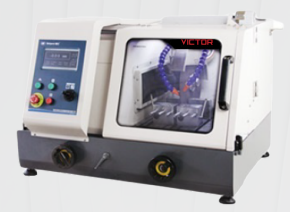
VIT 100 – Fibre Cutter

[product_tags_no_comma_alt]

Application

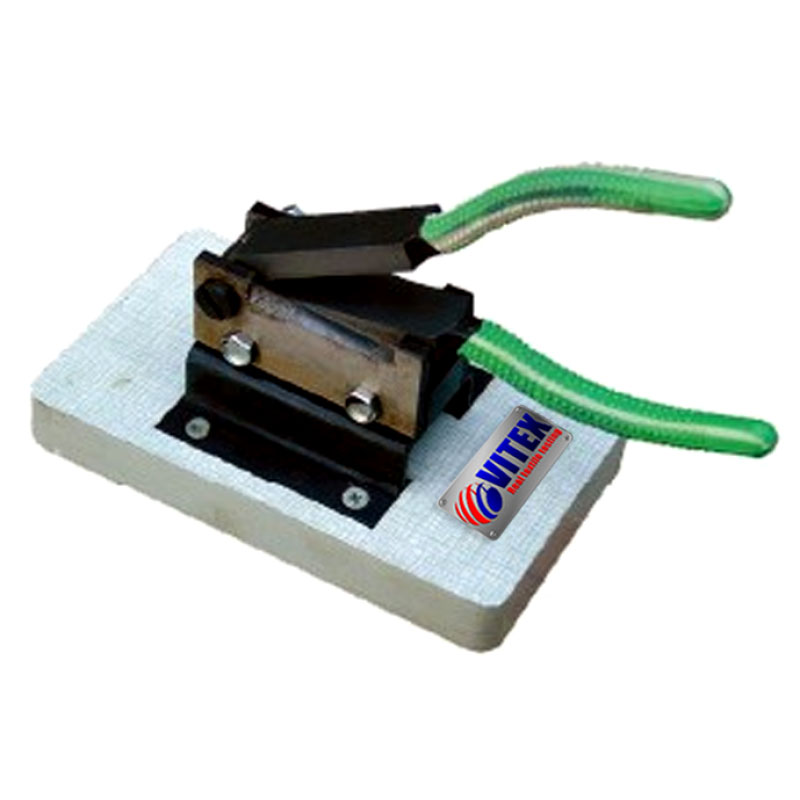
The Fibre Cutter is designed to cut fibers to specific lengths for testing linear density. It ensures consistent fiber preparation, which is essential for accurate analysis in textile quality control.

Features

Fiber fineness is a crucial indicator of textile quality, influencing yarn strength, fabric softness, and production efficiency. Finer fibers generally produce stronger yarns and smoother fabrics, though overly fine fibers may increase breakage rates. Measuring fiber fineness typically uses indirect indices like mass per unit length, as direct measurement of diameter or cross-sectional area is challenging due to fiber irregularities.

Specification

Standards Compliance:

  • GB/T14335
  • GB/T14336
  • GB/T6100

Technical Specifications:

  • Weight: 5 kg
  • Dimensions: 270 x 270 x 300 mm (L x W x H)
  • Knife-edge width: 10 mm, 20 mm, 25 mm, 30 mm, 40 mm
  • Knife-edge length: 45 mm

Testing Method

The test determines cotton fiber density by cutting a fixed-length bundle of fibers, counting the number of fibers, and calculating the average linear density.

Required Equipment:

  • Fibre Cutter
  • Fiber Fineness & Content Analysis System
  • Electronic Balance

Sample Preparation:

Prepare the cotton sliver following GB/T 6097 guidelines and extract a suitable amount of cotton fiber for testing. The sample weight typically ranges from 8 mg to 10 mg, maintaining the number of middle-segment roots between 1500 and 2000.

Test Procedure:

  1. Condition the sample to the required temperature (20±2)℃ and relative humidity (65±3)%.
  2. Align the cotton bundles manually, ensuring fibers are straight and parallel.
  3. Comb the cotton bundle and hold it with clips, keeping the ends neat.
  4. Position the cotton bundle between the upper and lower splints of the fiber cutter, ensuring the correct overhang: 5-6 mm for fine velvet cotton and 7 mm for long-staple cotton.
  5. Close the splints and cut the fibers evenly.
  6. Weigh the cut sample with an electronic balance accurate to 0.01 mg and analyze it using the Fiber Fineness & Content Analysis System.

The Fibre Cutter plays a crucial role in preparing precise fiber samples, directly influencing the accuracy and reliability of fiber density measurements.

Coming Soon

Application

The Fibre Cutter is designed to cut fibers to specific lengths for testing linear density. It ensures consistent fiber preparation, which is essential for accurate analysis in textile quality control.

Features

Fiber fineness is a crucial indicator of textile quality, influencing yarn strength, fabric softness, and production efficiency. Finer fibers generally produce stronger yarns and smoother fabrics, though overly fine fibers may increase breakage rates. Measuring fiber fineness typically uses indirect indices like mass per unit length, as direct measurement of diameter or cross-sectional area is challenging due to fiber irregularities.

Specification

Standards Compliance:

  • GB/T14335
  • GB/T14336
  • GB/T6100

Technical Specifications:

  • Weight: 5 kg
  • Dimensions: 270 x 270 x 300 mm (L x W x H)
  • Knife-edge width: 10 mm, 20 mm, 25 mm, 30 mm, 40 mm
  • Knife-edge length: 45 mm

Testing Method

The test determines cotton fiber density by cutting a fixed-length bundle of fibers, counting the number of fibers, and calculating the average linear density.

Required Equipment:

  • Fibre Cutter
  • Fiber Fineness & Content Analysis System
  • Electronic Balance

Sample Preparation:

Prepare the cotton sliver following GB/T 6097 guidelines and extract a suitable amount of cotton fiber for testing. The sample weight typically ranges from 8 mg to 10 mg, maintaining the number of middle-segment roots between 1500 and 2000.

Test Procedure:

  1. Condition the sample to the required temperature (20±2)℃ and relative humidity (65±3)%.
  2. Align the cotton bundles manually, ensuring fibers are straight and parallel.
  3. Comb the cotton bundle and hold it with clips, keeping the ends neat.
  4. Position the cotton bundle between the upper and lower splints of the fiber cutter, ensuring the correct overhang: 5-6 mm for fine velvet cotton and 7 mm for long-staple cotton.
  5. Close the splints and cut the fibers evenly.
  6. Weigh the cut sample with an electronic balance accurate to 0.01 mg and analyze it using the Fiber Fineness & Content Analysis System.

The Fibre Cutter plays a crucial role in preparing precise fiber samples, directly influencing the accuracy and reliability of fiber density measurements.
Coming Soon

Save Big on High-Precision Tools!
Get up to 30% off on selected testing machines. Hurry, offer ends soon!
Need Expert Advice?
Speak with our specialists to find the perfect engineering equipment for your needs.

Request a Quote or Further Information

Please fill in the request form below and one of our engineers will contact you to discuss your system requirements and if we can help, our typical response time is within 1 – 3 working day.

What you should know

Well, there's a few conditions that apply:

  • You agree NOT to pay us for this service.
  • You're comfortable with supplying us with relevant information in this form as well as other relevant information surrounding the request, for example; what you want, how many, delivery deadlines, restrictions on the location of the supplier, price targets etc.
  • We may only process requests where the email address submitted matches the company name. We may not respond to free email accounts such as Hotmail.
  • You agree that all information provided in this inquiry form represents yourself or an entity that you can speak for, that the information is accurate to the best of your knowledge and that if we determine that you have given false information we may choose not to proceed with this request.
  • You accept that, the operators of this site, cannot guarantee the suitability of any materials, equipment or services you may purchase from a supplier we've contacted on your behalf. You must check that out with the supplier.
  • We respect your privacy and only pass on the details contained in your request to appropriate suppliers in accordance to your inquiry. As we will share your information with related suppliers, we need your permission to do this by you clicking the submit button. We respect your privacy and promise you will only receive related information in accordance with testing and measuring instruments or equipment news and updates. You can unsubscribe from any of these services at any time by simply forwarding an email to [email protected].
  • We can't guarantee that the supplier will respond and if they don't, you agree you won't get angry with us. However, if you don't receive a response within 10 working days, please send us a follow-up message and we'll try and help further.