

Introduction

The International Safe Transit Association (ISTA) plays a pivotal role in the packaging industry by establishing standardized testing protocols that ensure products are protected throughout the distribution process. Adhering to ISTA standards not only minimizes product damage but also enhances customer satisfaction and reduces costs associated with returns and replacements.
Understanding ISTA Standards

ISTA standards are a series of test procedures designed to simulate the conditions packages encounter during transit.
These tests evaluate the durability and performance of packaging systems under various environmental and handling scenarios. By replicating real-world transportation stresses, ISTA standards help manufacturers design packaging that can withstand the rigors of shipping.
Classification of ISTA Test Series
ISTA has developed several test series, each targeting specific aspects of packaging performance:
ISTA 1 Series: Non-Simulation Integrity Performance Tests
These tests assess the strength and robustness of packaging without simulating environmental conditions. They are ideal for initial evaluations and benchmarking packaging performance over time.
ISTA 2 Series: Partial Simulation Performance Tests
Combining elements from both ISTA 1 and ISTA 3 series, these tests partially simulate real-world transit conditions, providing a more comprehensive assessment of packaging performance.
ISTA 3 Series: General Simulation Performance Tests
These tests closely replicate the actual conditions packages face during transportation, including handling, environmental factors, and mechanical stresses. They are applicable across various distribution systems and are useful for evaluating packaging under complex shipping scenarios.
ISTA 4 Series: Enhanced Simulation Performance Tests

These tests offer advanced simulations of transportation environments, incorporating data from field studies to create more accurate testing conditions.
ISTA 6 Series: Member Performance Tests
Developed in collaboration with ISTA members, these tests are tailored to specific supply chains or products, such as those for major retailers like Amazon or Walmart.
ISTA 7 Series: Thermal Testing
Focused on temperature-controlled transport, these tests assess the packaging’s ability to maintain product integrity under thermal stress, ensuring products remain within required temperature ranges during transit.
Key ISTA Test Procedures
Understanding specific ISTA test procedures can help in selecting the appropriate test for your packaging needs:
For packaged products weighing 150 lbs (68 kg) or less,
focusing on integrity testing without environmental simulation.
For packaged products weighing 150 lbs (68 kg) or less,
incorporating partial simulation elements like atmospheric conditioning.
Simulates the transportation environment for packaged products weighing 150 lbs (68 kg) or less, including vibration, drop, and compression tests.

Evaluates thermal performance of insulated shipping containers under controlled temperature profiles.
Benefits of ISTA Certification
Achieving ISTA certification offers several advantages:
- Reduced Product Damage:
By identifying and mitigating packaging weaknesses, companies can decrease the incidence of product damage during transit. - Cost Savings:
Improved packaging leads to fewer returns and replacements, resulting in significant cost reductions. - Enhanced Customer Satisfaction:
Delivering products intact boosts customer trust and loyalty. - Market Access:
ISTA certification is often a requirement for doing business with major retailers and distributors, facilitating market entry and expansion.
Implementing ISTA Testing
To implement ISTA testing:
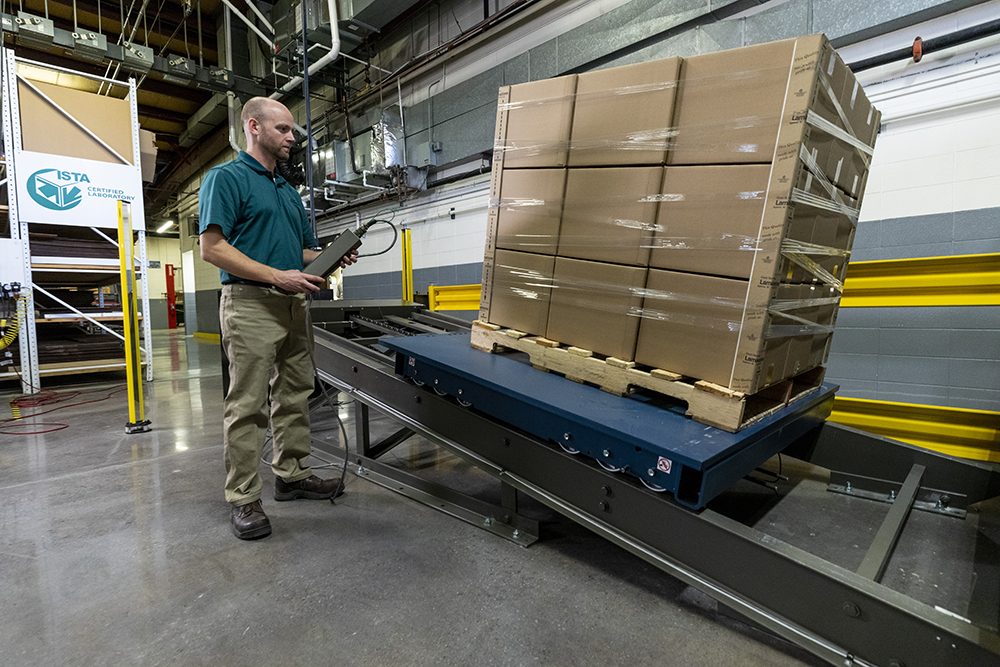
- Identify the Appropriate Test: Determine which ISTA test procedure aligns with your product’s weight, size, and distribution environment.
- Select a Certified Laboratory: Engage with an ISTA-certified lab equipped to perform the chosen test procedure.
- Conduct Testing: Submit your packaging for testing to evaluate its performance under simulated transit conditions.
- Analyze Results and Improve: Use the test results to make informed decisions about packaging design enhancements.
- Obtain Certification: Upon successful testing, your packaging can be certified, signaling compliance with ISTA standards.
Conclusion
ISTA standards play a vital role in ensuring that products reach consumers safely and in good condition. By adhering to these testing protocols, companies can enhance packaging performance, reduce costs, and meet the rigorous demands of global distribution networks.