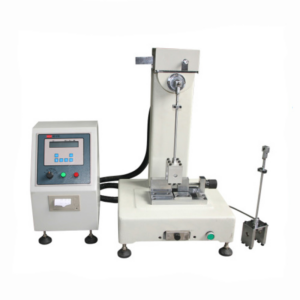
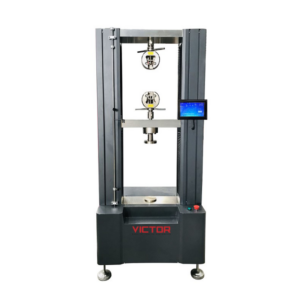
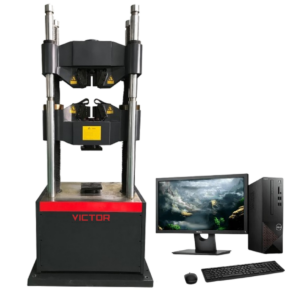
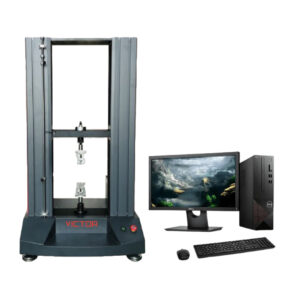
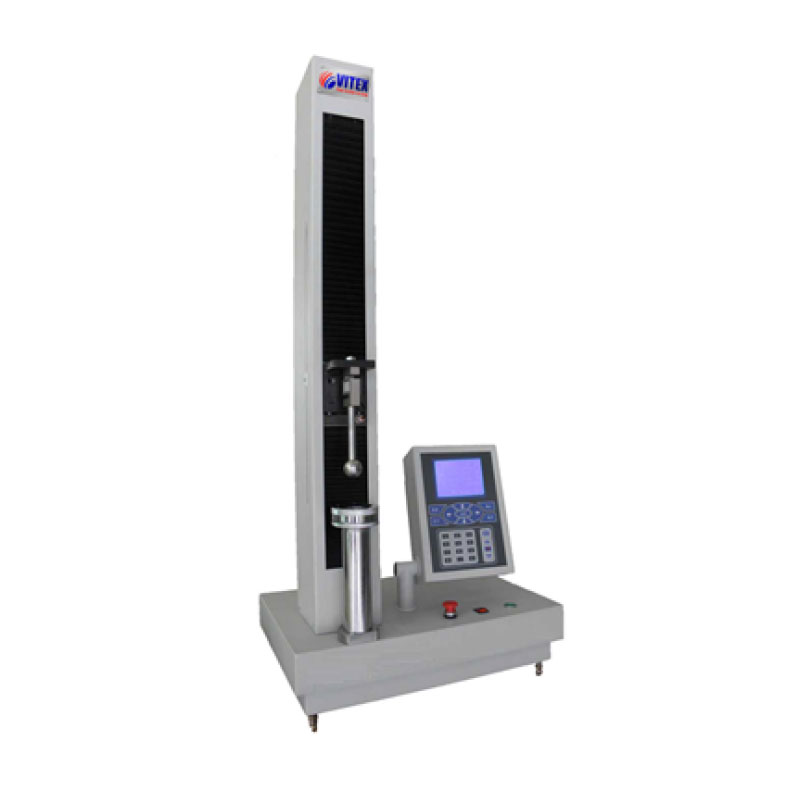
VIT 003 – Fabric Ball-bursting Strength Tester for Textile Durability Testing

[product_tags_no_comma_alt]

Application

The Fabric Ball-bursting Strength Tester is designed to evaluate the ball-bursting strength and expansion rate of a variety of textiles, including cotton fabrics, elastic fabrics, and products such as socks and gloves. This tester helps determine how well fabrics perform under stress and their ability to withstand bursting forces, essential for quality control in textile manufacturing.

Features

  • Test Range: 2500 N
  • Speed Range: 5 – 500 mm/min, adjustable
  • Bursting Balls: Available in SΦ20mm (or SΦ25mm, SΦ38mm) sizes
  • Test Rig: One set included
  • Control System: Micro-computer control for precise operation of the quality motor and screws
  • Display: LCD screen for clear reading of displacement, force, speed, and more.

Testing Method

What is Fabric Burst or Bulge?
Fabric bursting occurs when multi-directional forces cause a fabric to expand and eventually rupture. Due to the anisotropic strength and deformation of woven and knitted fabrics, the material elongates in multiple directions under force. The fabric typically bursts at the point of maximum deformation, often along the weft or meridional direction, leading to breakage.

Common Testing Methods for Fabric Burst
There are several methods for testing fabric burst strength, including:

  • Hydraulic Method: Applying liquid pressure under an extensible diaphragm to expand the fabric until rupture.
  • Gas Pressure Method: Using gas pressure to expand the fabric until it bursts.
  • Steel Ball Method: Applying pressure from a steel ball to puncture and expand the fabric until rupture, commonly used in the Ball-bursting Strength Tester.

Test Method for Steel Ball-bursting Strength

  1. Start the preheating process and select the burst function on the tester, adjusting the edge distance and position shift.
  2. Clamp the specimen in the test ring, initiate the test, and observe as the specimen is punctured. The device will display the data once the fabric is fully pierced.
  3. Repeat the test for five samples, recording and averaging the results.

Important Notes

  1. The accuracy of test results is enhanced by selecting the appropriate test method and equipment based on the fabric type.
  2. As fabric strength varies depending on material, it’s essential to estimate fabric strength prior to testing and select the correct range to minimize testing errors.
  3. Regular maintenance, calibration, and overhauls are necessary to ensure accurate results.

Specification

Standards

  • ISO 9073-5
  • ASTM D3787
  • ASTM D6796
  • FZ/T01030
  • GB/T19976
  • FZ/T 6001

Power

  • 220 V 50/60 Hz

Weight

  • 100 Kg

Dimensions

  • 680 x 580 x 1640 mm (L x W x H)

Coming Soon

Application

The Fabric Ball-bursting Strength Tester is designed to evaluate the ball-bursting strength and expansion rate of a variety of textiles, including cotton fabrics, elastic fabrics, and products such as socks and gloves. This tester helps determine how well fabrics perform under stress and their ability to withstand bursting forces, essential for quality control in textile manufacturing.

Features

  • Test Range: 2500 N
  • Speed Range: 5 – 500 mm/min, adjustable
  • Bursting Balls: Available in SΦ20mm (or SΦ25mm, SΦ38mm) sizes
  • Test Rig: One set included
  • Control System: Micro-computer control for precise operation of the quality motor and screws
  • Display: LCD screen for clear reading of displacement, force, speed, and more.

Testing Method

What is Fabric Burst or Bulge?
Fabric bursting occurs when multi-directional forces cause a fabric to expand and eventually rupture. Due to the anisotropic strength and deformation of woven and knitted fabrics, the material elongates in multiple directions under force. The fabric typically bursts at the point of maximum deformation, often along the weft or meridional direction, leading to breakage.

Common Testing Methods for Fabric Burst
There are several methods for testing fabric burst strength, including:

  • Hydraulic Method: Applying liquid pressure under an extensible diaphragm to expand the fabric until rupture.
  • Gas Pressure Method: Using gas pressure to expand the fabric until it bursts.
  • Steel Ball Method: Applying pressure from a steel ball to puncture and expand the fabric until rupture, commonly used in the Ball-bursting Strength Tester.

Test Method for Steel Ball-bursting Strength

  1. Start the preheating process and select the burst function on the tester, adjusting the edge distance and position shift.
  2. Clamp the specimen in the test ring, initiate the test, and observe as the specimen is punctured. The device will display the data once the fabric is fully pierced.
  3. Repeat the test for five samples, recording and averaging the results.

Important Notes

  1. The accuracy of test results is enhanced by selecting the appropriate test method and equipment based on the fabric type.
  2. As fabric strength varies depending on material, it’s essential to estimate fabric strength prior to testing and select the correct range to minimize testing errors.
  3. Regular maintenance, calibration, and overhauls are necessary to ensure accurate results.
Specification

Standards

  • ISO 9073-5
  • ASTM D3787
  • ASTM D6796
  • FZ/T01030
  • GB/T19976
  • FZ/T 6001

Power

  • 220 V 50/60 Hz

Weight

  • 100 Kg

Dimensions

  • 680 x 580 x 1640 mm (L x W x H)

Coming Soon

Save Big on High-Precision Tools!
Get up to 30% off on selected testing machines. Hurry, offer ends soon!
Need Expert Advice?
Speak with our specialists to find the perfect engineering equipment for your needs.

Request a Quote or Further Information

Please fill in the request form below and one of our engineers will contact you to discuss your system requirements and if we can help, our typical response time is within 1 – 3 working day.

What you should know

Well, there's a few conditions that apply:

  • You agree NOT to pay us for this service.
  • You're comfortable with supplying us with relevant information in this form as well as other relevant information surrounding the request, for example; what you want, how many, delivery deadlines, restrictions on the location of the supplier, price targets etc.
  • We may only process requests where the email address submitted matches the company name. We may not respond to free email accounts such as Hotmail.
  • You agree that all information provided in this inquiry form represents yourself or an entity that you can speak for, that the information is accurate to the best of your knowledge and that if we determine that you have given false information we may choose not to proceed with this request.
  • You accept that, the operators of this site, cannot guarantee the suitability of any materials, equipment or services you may purchase from a supplier we've contacted on your behalf. You must check that out with the supplier.
  • We respect your privacy and only pass on the details contained in your request to appropriate suppliers in accordance to your inquiry. As we will share your information with related suppliers, we need your permission to do this by you clicking the submit button. We respect your privacy and promise you will only receive related information in accordance with testing and measuring instruments or equipment news and updates. You can unsubscribe from any of these services at any time by simply forwarding an email to [email protected].
  • We can't guarantee that the supplier will respond and if they don't, you agree you won't get angry with us. However, if you don't receive a response within 10 working days, please send us a follow-up message and we'll try and help further.