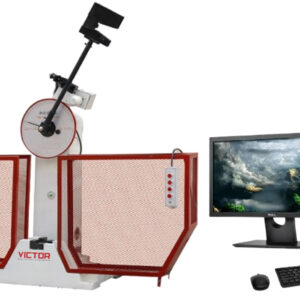
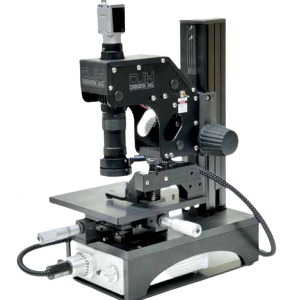
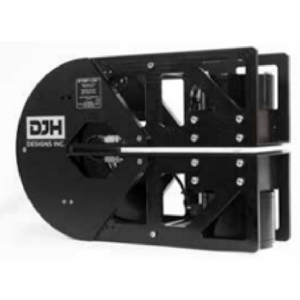
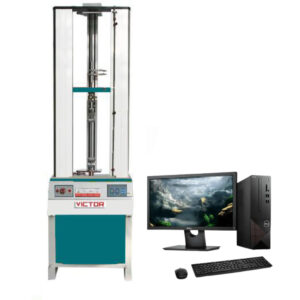
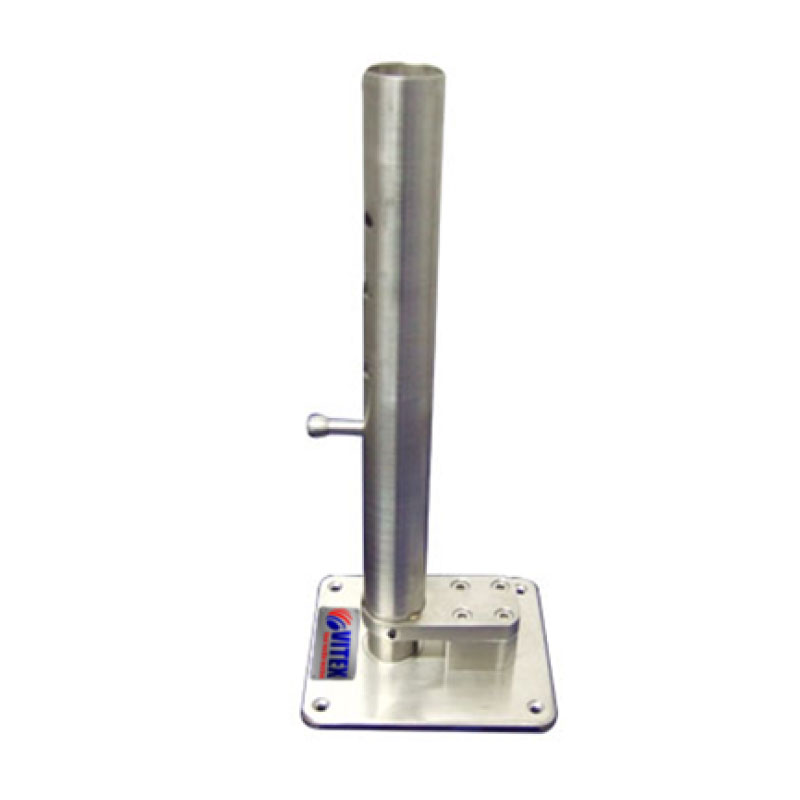
VIT 144A – Button Impact Tester for Impact Resistance Testing of Plastic Buttons

[product_tags_no_comma_alt]

Application

The Button Impact Tester is designed to assess the impact resistance of plastic sew-through flange buttons. The tester evaluates the button’s ability to withstand a falling mass of 0.84 kg (29.5 oz), released from heights of 32mm, 44mm, 67mm, 83mm, 95mm, 117mm, or 200mm, as required. Failure is determined by cracking, chipping, or breakage of the button.

Testing Method

Factors Influencing Button Impact Resistance
Several factors affect a button’s ability to resist failure under impact conditions, including:

  • Resin formulation
  • Shape, size (ligne), and thickness of the button
  • Number and spacing of holes
    It’s important to note that a button may pass the impact test but could still fail during the garment pressing process due to heat exposure.

Test Range
The Button Impact Tester detects the impact resistance of all types of buttons (diameter above 10mm) during garment manufacturing or everyday use. It is also suitable for acceptance testing of commercial button shipments and for testing the impact resistance of plastic sewing fasteners.

Test Principle
The tester increases tension on the button gradually until cracks appear on the surface. It also tests the button’s hardness by releasing a pendulum of a specific mass from a certain height to strike the button.

Test Procedure

  1. Test Sample: Ten buttons are randomly selected for each test.
  2. Tension Mode Test:
    • Pass an electrode through the button hole.
    • Install the buttons on a tension meter and gradually increase pressure until the button breaks.
    • Record the pressure value at the point of failure. Repeat this process with the remaining buttons to calculate the average pressure, with a deviation error not exceeding 25%.
  3. Impact Test:
    • Fix the button to be tested in a clamp and position it to face the pendulum.
    • Use different hole configurations for buttons with two or four holes.
    • Lift and release the pendulum, allowing it to strike the button.
    • Record if the button is broken or deformed.
    • Repeat testing until all samples are tested.

Testing Report
The report will classify buttons into “light” and “heavy” categories based on tensile strength and diameter. Buttons that undergo the impact test should not be broken or deformed. The report will include:

  • Button strength data
  • Observations and recommendations based on the standard
  • Detailed information on any deviations encountered during testing

Test Parameters

  • Impact Load: 0.84 kg
  • Impact Heights: 32mm, 44mm, 67mm, 83mm, 95mm, 117mm, 200mm

Specification

Standards

  • ASTM D5171

Weight
20 Kg

Dimensions
240 x 200 x 340mm (L x W x H)

Coming Soon

Application

The Button Impact Tester is designed to assess the impact resistance of plastic sew-through flange buttons. The tester evaluates the button’s ability to withstand a falling mass of 0.84 kg (29.5 oz), released from heights of 32mm, 44mm, 67mm, 83mm, 95mm, 117mm, or 200mm, as required. Failure is determined by cracking, chipping, or breakage of the button.

Testing Method

Factors Influencing Button Impact Resistance
Several factors affect a button’s ability to resist failure under impact conditions, including:

  • Resin formulation
  • Shape, size (ligne), and thickness of the button
  • Number and spacing of holes
    It’s important to note that a button may pass the impact test but could still fail during the garment pressing process due to heat exposure.

Test Range
The Button Impact Tester detects the impact resistance of all types of buttons (diameter above 10mm) during garment manufacturing or everyday use. It is also suitable for acceptance testing of commercial button shipments and for testing the impact resistance of plastic sewing fasteners.

Test Principle
The tester increases tension on the button gradually until cracks appear on the surface. It also tests the button’s hardness by releasing a pendulum of a specific mass from a certain height to strike the button.

Test Procedure

  1. Test Sample: Ten buttons are randomly selected for each test.
  2. Tension Mode Test:
    • Pass an electrode through the button hole.
    • Install the buttons on a tension meter and gradually increase pressure until the button breaks.
    • Record the pressure value at the point of failure. Repeat this process with the remaining buttons to calculate the average pressure, with a deviation error not exceeding 25%.
  3. Impact Test:
    • Fix the button to be tested in a clamp and position it to face the pendulum.
    • Use different hole configurations for buttons with two or four holes.
    • Lift and release the pendulum, allowing it to strike the button.
    • Record if the button is broken or deformed.
    • Repeat testing until all samples are tested.

Testing Report
The report will classify buttons into “light” and “heavy” categories based on tensile strength and diameter. Buttons that undergo the impact test should not be broken or deformed. The report will include:

  • Button strength data
  • Observations and recommendations based on the standard
  • Detailed information on any deviations encountered during testing

Test Parameters

  • Impact Load: 0.84 kg
  • Impact Heights: 32mm, 44mm, 67mm, 83mm, 95mm, 117mm, 200mm

Specification

Standards

  • ASTM D5171

Weight
20 Kg

Dimensions
240 x 200 x 340mm (L x W x H)
Coming Soon

Save Big on High-Precision Tools!
Get up to 30% off on selected testing machines. Hurry, offer ends soon!
Need Expert Advice?
Speak with our specialists to find the perfect engineering equipment for your needs.

Request a Quote or Further Information

Please fill in the request form below and one of our engineers will contact you to discuss your system requirements and if we can help, our typical response time is within 1 – 3 working day.

What you should know

Well, there's a few conditions that apply:

  • You agree NOT to pay us for this service.
  • You're comfortable with supplying us with relevant information in this form as well as other relevant information surrounding the request, for example; what you want, how many, delivery deadlines, restrictions on the location of the supplier, price targets etc.
  • We may only process requests where the email address submitted matches the company name. We may not respond to free email accounts such as Hotmail.
  • You agree that all information provided in this inquiry form represents yourself or an entity that you can speak for, that the information is accurate to the best of your knowledge and that if we determine that you have given false information we may choose not to proceed with this request.
  • You accept that, the operators of this site, cannot guarantee the suitability of any materials, equipment or services you may purchase from a supplier we've contacted on your behalf. You must check that out with the supplier.
  • We respect your privacy and only pass on the details contained in your request to appropriate suppliers in accordance to your inquiry. As we will share your information with related suppliers, we need your permission to do this by you clicking the submit button. We respect your privacy and promise you will only receive related information in accordance with testing and measuring instruments or equipment news and updates. You can unsubscribe from any of these services at any time by simply forwarding an email to [email protected].
  • We can't guarantee that the supplier will respond and if they don't, you agree you won't get angry with us. However, if you don't receive a response within 10 working days, please send us a follow-up message and we'll try and help further.