VMT 220 – Rotating Drum Snag Resistance Tester

[product_tags_no_comma_alt]

Application

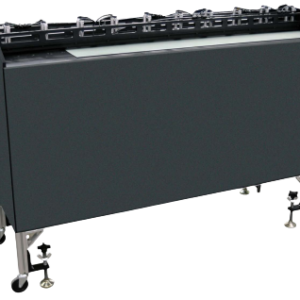
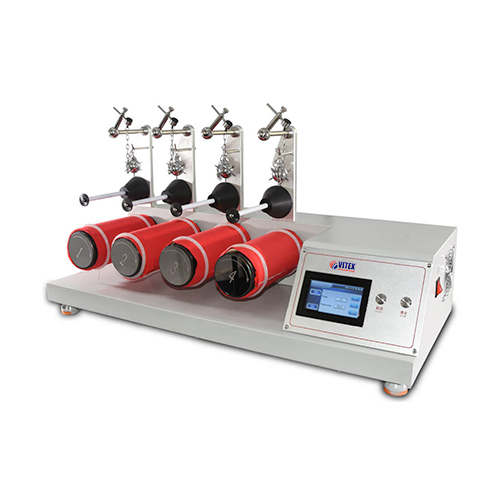
The Rotating Drum Snag Resistance Tester is designed to evaluate the tendency of fabrics to snag by assessing how easily yarn loops are pulled from the fabric during normal wear. It features four rotating test cylinders, each fitted with fabric sleeves and mace balls with tungsten carbide points. The system is controlled by a programmable electronic counter, ensuring consistent and repeatable results. A set of four felt sleeves is included with the tester.

Definition Fabric snagging is a common defect caused by plucking, pulling, and external friction. Evaluating a fabric’s snag resistance helps manufacturers prevent this issue and improve fabric durability.

Testing Method

A cylindrical fabric specimen is mounted on a rotating drum. As the drum spins, the mace ball flips and bounces against the fabric’s surface, simulating wear and snagging. The degree of snagging is influenced by factors such as fabric composition and construction. The sample is visually compared with standard reference photographs to assess the snagging level, rated on a scale from 5 (no noticeable snagging) to 1 (severe snagging).

Preparation

  • Fabric Dimensions: Weft-knitted fabrics: 205 mm x 330 mm; Warp-knitted and woven fabrics: 205 mm x 320 mm
  • Felt Sleeve: Green S/924 (70% wool, 30% rayon), 1.6 mm thick, 235 g/m²
  • Spacer Plate: Sets hammer position
  • Rubber Ring: Secures the fabric specimen
  • Sewing Thread: Cotton or polyester/cotton (Line Number 30–50)
  • Standard Calibrated Fabric: Reference fabric provided by purchaser or supplier
  • Standard Sample Photographs: Rating scale from 1 to 5
  • Specimen: Prepared after washing or dry-cleaning if needed

Mace Snagging Test Procedure

  1. Fit the rotary drum with the felt sleeve and ensure it’s completely dry.
  2. Condition the specimen for at least 4 hours at 21 ± 1°C and 65 ± 2% humidity.
  3. Inspect the specimen for flaws such as accidental snagging or pilling and replace if necessary.
  4. Mount the specimen on the rotating drum with the fabric facing outward, smoothing the seam and securing it with a rubber ring or adhesive tape.
  5. Ensure multiple drum-mounted specimens have consistent orientation.
  6. Position the mace ball so it can move freely over the fabric surface.
  7. Set the machine to 600 revolutions and start the test.
  8. After testing, remove the specimen and inspect for snagging.

Results Snagging is evaluated using standard sample photographs:

  • Grade 5: No noticeable snagging
  • Grade 1: Severe snagging

Snagging types:

  • Protruding loops without fabric deformation
  • Deformation without protruding loops
  • Both protrusion and deformation

Reports should note any large protrusions (over 4 mm), significant deformations (over 15 mm), or noticeable color changes.

Test Report

  • Fabric specifications and material details
  • Specimen preparation method (washing/dry cleaning)
  • Testing procedure (Method ABC or ICI)
  • Test parameters (600 rpm or other settings)
  • Ironing status and temperature, if applicable
  • Average snagging resistance grade for fabric length and width

Specification

Optional Accessories

  • Tungsten Carbide Points (Pack of 12)
  • Felt Sleeves (Pack of 4)
  • Snagging Evaluation Photographs

Technical Specifications

  • Mace Diameter: 31.75 mm
  • Mace Weight: 160 g
  • Mace Projection Length: 10 mm
  • Rotation Speed: 60 ± 2 rpm
  • Standards ASTM D3939, GB/T 11047, JIS L1058, MN405E
  • Power Supply 220/110 V, 50/60 Hz
  • Weight 88 kg
  • Dimensions 700 x 450 x 400 mm (L x W x H)

Coming Soon

Application

The Rotating Drum Snag Resistance Tester is designed to evaluate the tendency of fabrics to snag by assessing how easily yarn loops are pulled from the fabric during normal wear. It features four rotating test cylinders, each fitted with fabric sleeves and mace balls with tungsten carbide points. The system is controlled by a programmable electronic counter, ensuring consistent and repeatable results. A set of four felt sleeves is included with the tester.

Definition Fabric snagging is a common defect caused by plucking, pulling, and external friction. Evaluating a fabric’s snag resistance helps manufacturers prevent this issue and improve fabric durability.

Testing Method

A cylindrical fabric specimen is mounted on a rotating drum. As the drum spins, the mace ball flips and bounces against the fabric’s surface, simulating wear and snagging. The degree of snagging is influenced by factors such as fabric composition and construction. The sample is visually compared with standard reference photographs to assess the snagging level, rated on a scale from 5 (no noticeable snagging) to 1 (severe snagging).

Preparation

  • Fabric Dimensions: Weft-knitted fabrics: 205 mm x 330 mm; Warp-knitted and woven fabrics: 205 mm x 320 mm
  • Felt Sleeve: Green S/924 (70% wool, 30% rayon), 1.6 mm thick, 235 g/m²
  • Spacer Plate: Sets hammer position
  • Rubber Ring: Secures the fabric specimen
  • Sewing Thread: Cotton or polyester/cotton (Line Number 30–50)
  • Standard Calibrated Fabric: Reference fabric provided by purchaser or supplier
  • Standard Sample Photographs: Rating scale from 1 to 5
  • Specimen: Prepared after washing or dry-cleaning if needed

Mace Snagging Test Procedure

  1. Fit the rotary drum with the felt sleeve and ensure it’s completely dry.
  2. Condition the specimen for at least 4 hours at 21 ± 1°C and 65 ± 2% humidity.
  3. Inspect the specimen for flaws such as accidental snagging or pilling and replace if necessary.
  4. Mount the specimen on the rotating drum with the fabric facing outward, smoothing the seam and securing it with a rubber ring or adhesive tape.
  5. Ensure multiple drum-mounted specimens have consistent orientation.
  6. Position the mace ball so it can move freely over the fabric surface.
  7. Set the machine to 600 revolutions and start the test.
  8. After testing, remove the specimen and inspect for snagging.

Results Snagging is evaluated using standard sample photographs:

  • Grade 5: No noticeable snagging
  • Grade 1: Severe snagging

Snagging types:

  • Protruding loops without fabric deformation
  • Deformation without protruding loops
  • Both protrusion and deformation

Reports should note any large protrusions (over 4 mm), significant deformations (over 15 mm), or noticeable color changes.

Test Report

  • Fabric specifications and material details
  • Specimen preparation method (washing/dry cleaning)
  • Testing procedure (Method ABC or ICI)
  • Test parameters (600 rpm or other settings)
  • Ironing status and temperature, if applicable
  • Average snagging resistance grade for fabric length and width
Specification

Optional Accessories

  • Tungsten Carbide Points (Pack of 12)
  • Felt Sleeves (Pack of 4)
  • Snagging Evaluation Photographs

Technical Specifications

  • Mace Diameter: 31.75 mm
  • Mace Weight: 160 g
  • Mace Projection Length: 10 mm
  • Rotation Speed: 60 ± 2 rpm
  • Standards ASTM D3939, GB/T 11047, JIS L1058, MN405E
  • Power Supply 220/110 V, 50/60 Hz
  • Weight 88 kg
  • Dimensions 700 x 450 x 400 mm (L x W x H)

Coming Soon

Save Big on High-Precision Tools!
Get up to 30% off on selected testing machines. Hurry, offer ends soon!
Need Expert Advice?
Speak with our specialists to find the perfect engineering equipment for your needs.

Request a Quote or Further Information

Please fill in the request form below and one of our engineers will contact you to discuss your system requirements and if we can help, our typical response time is within 1 – 3 working day.

What you should know

Well, there's a few conditions that apply:

  • You agree NOT to pay us for this service.
  • You're comfortable with supplying us with relevant information in this form as well as other relevant information surrounding the request, for example; what you want, how many, delivery deadlines, restrictions on the location of the supplier, price targets etc.
  • We may only process requests where the email address submitted matches the company name. We may not respond to free email accounts such as Hotmail.
  • You agree that all information provided in this inquiry form represents yourself or an entity that you can speak for, that the information is accurate to the best of your knowledge and that if we determine that you have given false information we may choose not to proceed with this request.
  • You accept that, the operators of this site, cannot guarantee the suitability of any materials, equipment or services you may purchase from a supplier we've contacted on your behalf. You must check that out with the supplier.
  • We respect your privacy and only pass on the details contained in your request to appropriate suppliers in accordance to your inquiry. As we will share your information with related suppliers, we need your permission to do this by you clicking the submit button. We respect your privacy and promise you will only receive related information in accordance with testing and measuring instruments or equipment news and updates. You can unsubscribe from any of these services at any time by simply forwarding an email to [email protected].
  • We can't guarantee that the supplier will respond and if they don't, you agree you won't get angry with us. However, if you don't receive a response within 10 working days, please send us a follow-up message and we'll try and help further.